US corn stocks came in well above last year’s level, reopening questions about how much grain livestock consumed during the last crop year. Nigerian feed mills, livestock producers and grain buyers should treat the update as a benchmark signal and check the basis of every supplier quotation.
What the stocks report says
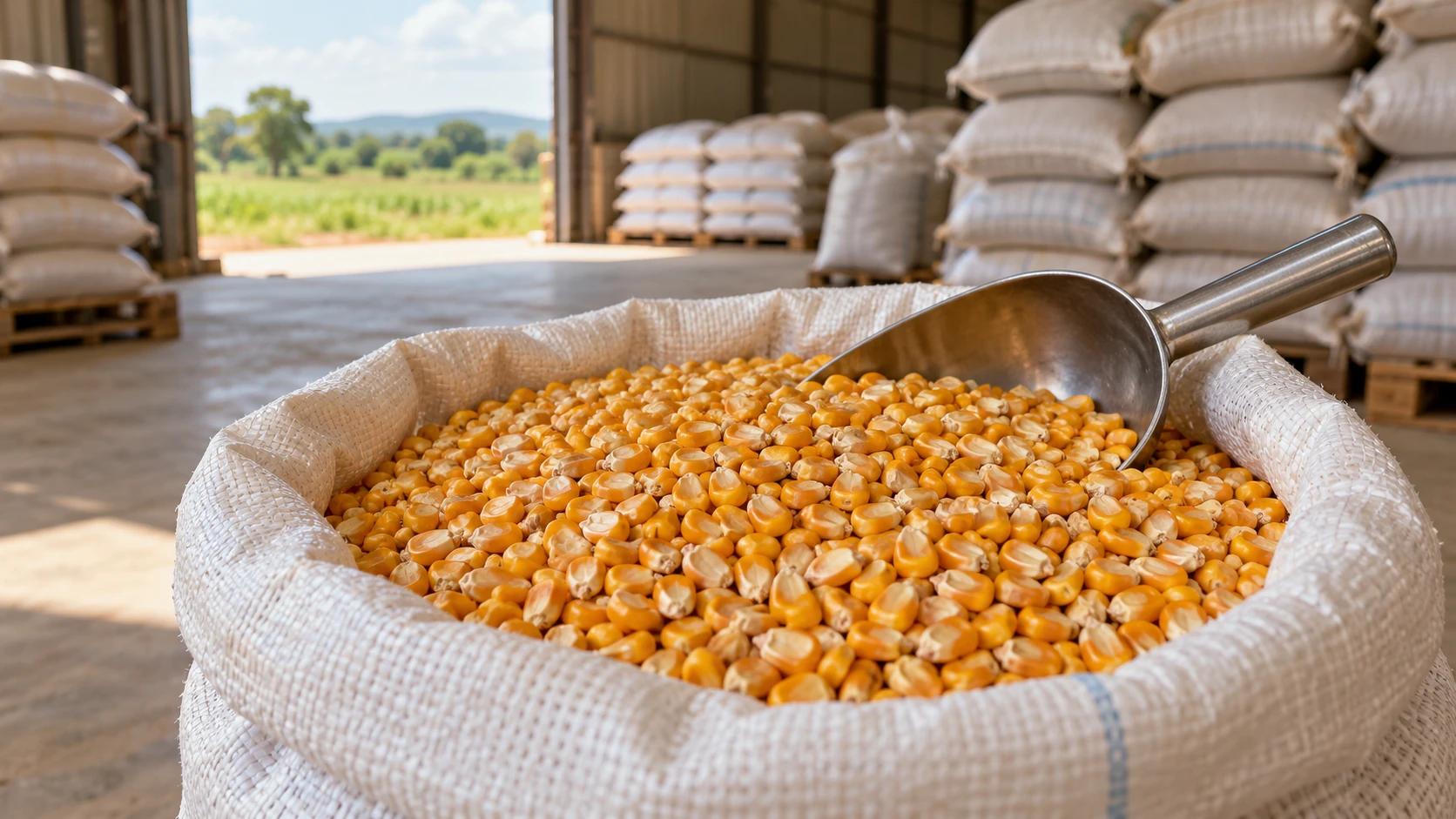
The US Department of Agriculture’s Grain Stocks report, released on 30 September 2026, estimated old-crop corn held in all US positions at 2.095 billion bushels, or 53.217 million metric tonnes, on 1 September. That was 35 per cent above the 1.551 billion bushels recorded a year earlier.
Of the 2026 total, 787.3 million bushels were stored on farms and 1.308 billion bushels were off farm. The off-farm category includes grain at mills, elevators, warehouses, terminals and processors. USDA also estimated June to August disappearance at 3.20 billion bushels, compared with 3.10 billion bushels during the same period in 2025.
The number matters because stocks are what remain after recorded supply and use. Reuters reported on 9 October that the total was 9 per cent above the average analyst expectation. Its analysis said the surprise had led some market participants to question earlier estimates of feed and residual use.
Feed and residual use is an estimate, not a direct count of every tonne eaten by livestock. The residual also absorbs differences across production, stocks and other recorded uses. A larger final stock can therefore lead analysts to reassess earlier demand assumptions.
What it means for Nigerian buyers
This report does not provide a Nigerian maize price. It also does not prove that imported feed grain will become cheaper. Nigerian quotes still depend on origin, grade, exchange rate, freight, duties where applicable, port costs, inland haulage and the supplier’s delivery position.
The update does give procurement teams a reason to challenge the market story behind a quote. A seller referring to abundant global corn should state the origin, grade, delivery window and commercial basis. A seller citing tight supply should explain whether the constraint is physical grain, quality, freight, FX or local availability.
Compare offers on the same basis. Record the currency, price per metric tonne, Incoterm, loading point, destination, quote expiry and payment date. An FOB offer excludes the ocean freight and insurance included in a CIF offer. A warehouse or delivered quote may include costs that an international futures reference does not.
Check quality before comparing price
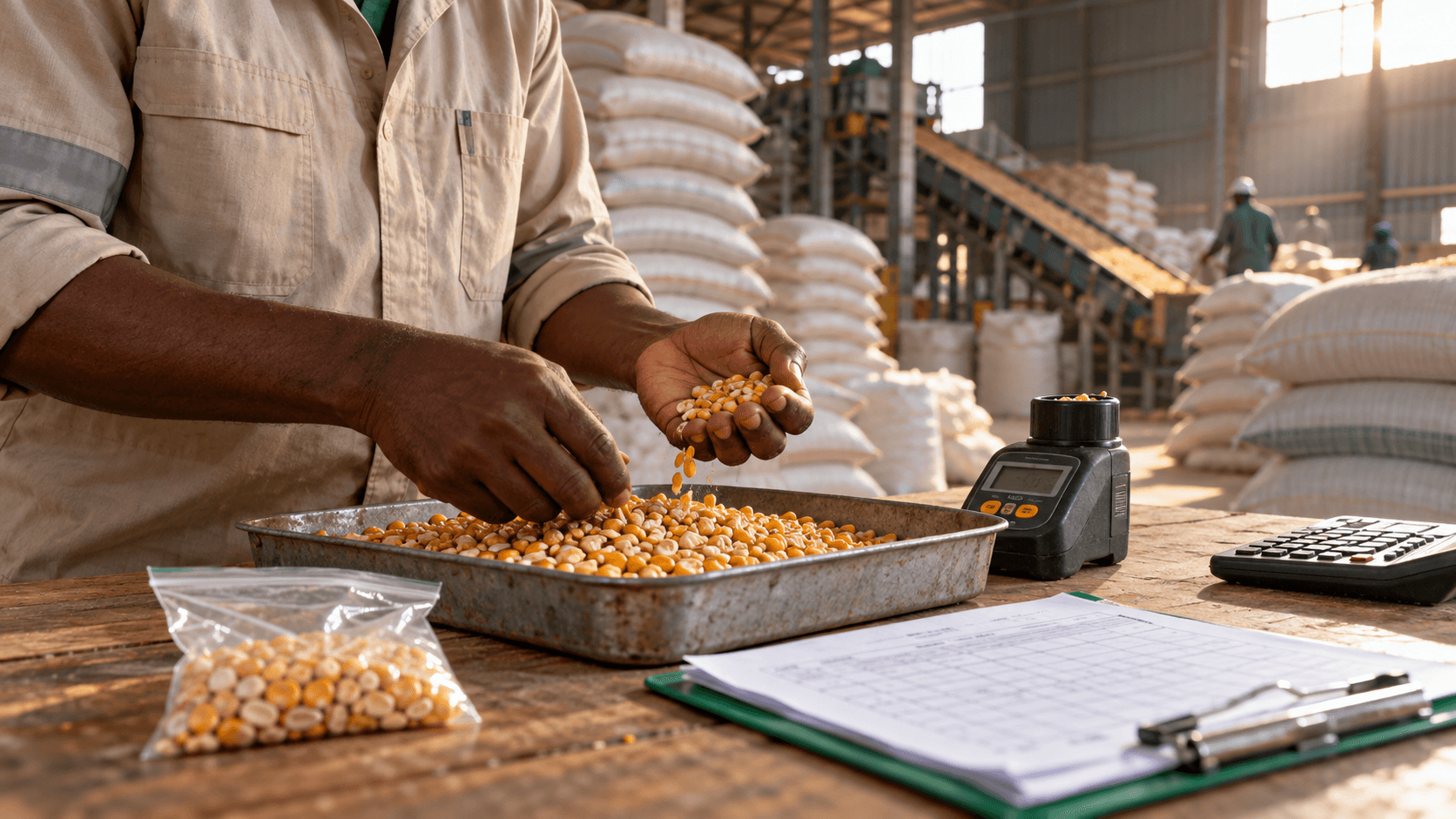
A lower price per tonne can hide a costly specification gap. For maize, agree moisture, test weight where used, broken kernels, foreign matter, insect damage and mycotoxin limits. State the sampling method, testing laboratory, rejection rule and who pays for a failed lot.
Feed buyers should also compare usable nutrient value, not weight alone. Confirm whether the formulation assumes a specific moisture level and whether a substitute ingredient changes protein, energy or processing performance. Use an approved sample when the origin, supplier or grade is new.
Keep the data in perspective
USDA says the September estimates came from separate on-farm and off-farm surveys. The on-farm survey sampled about 66,600 operators, while the off-farm survey covered roughly 7,800 known commercial storage facilities. The agency also states that stocks can be revised when late reports, reporting errors or production revisions become available.
That means buyers should watch the next balance-sheet updates without treating one report as a guaranteed price direction. For current procurement, ask for fresh comparable offers, test the landed cost against more than one FX and freight assumption, and keep the specification beside the price sheet. Businesses sourcing agricultural commodities can contact Artesana to discuss product requirements and trade documentation.
Sources
- USDA National Agricultural Statistics Service, Grain Stocks, released 30 September 2026. Data date: 1 September 2026.
- Reuters, Bigger US corn stocks fuel doubts about USDA livestock feeding data, 9 October 2026.