India's sugar outlook has changed sharply just as the new marketing year begins. For Nigerian buyers, the immediate job is to test supplier quotations against the new supply picture without treating a production forecast as a confirmed price increase.
The forecast changed
A USDA Foreign Agricultural Service report, published on 5 October and reported by Reuters on 8 October, cut India's 2026/27 sugar production forecast to 29.5 million metric tons from 33.6 million metric tons. The marketing year started in October 2026.
The same update projected India's sugarcane crop at 434 million metric tons, down from 455 million metric tons in the previous season. USDA's New Delhi office linked the reduction to a severe 2026 rainfall deficit, weaker sucrose content in cane, a smaller effective harvested area and possible water shortages at mills in early 2027.
The weather risk remains active. The World Meteorological Organization said on 8 October that El Nino was strengthening, with a near-100 per cent likelihood of lasting through February 2027. Its October-to-December outlook showed a drier-than-normal signal over the Indian subcontinent. WMO also warned that regional signals do not replace national and local forecasts.
These figures are forecasts, not a Nigerian spot price or an offer of physical sugar. They point to tighter production expectations in a major sugar market, while actual export availability, policy, freight and buyer demand can still change the result.
Compare the full quotation
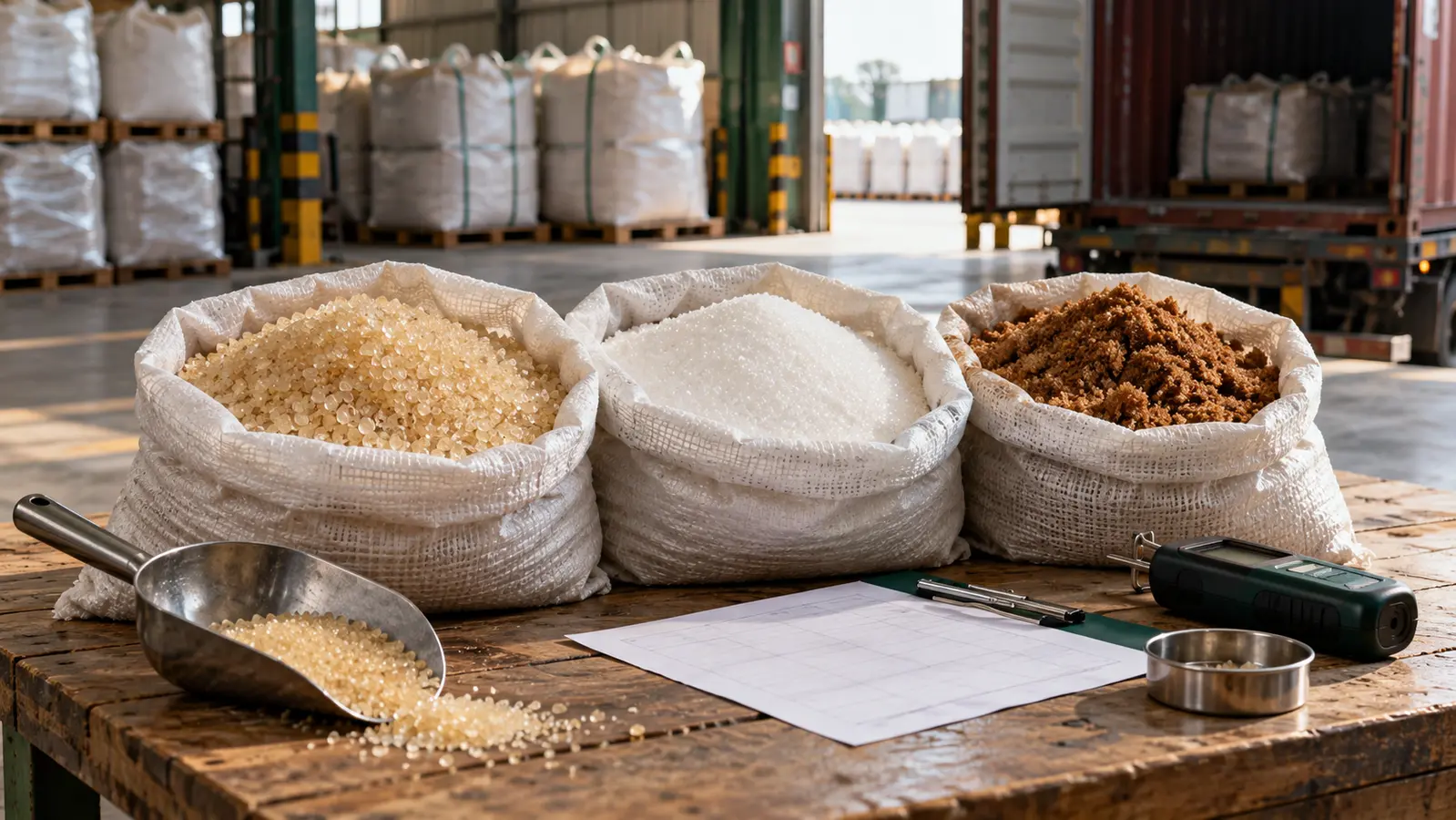
A supplier's headline price is only useful when the grade and trading basis are clear. Ask whether the offer covers raw, refined white or another sugar grade. Record the origin, crop or production period, quantity, currency, price per metric ton, Incoterm, loading port, destination port, shipment window and quote expiry.
For refined sugar, agree the required colour specification, moisture, polarisation, grain size, packaging and testing method. For raw sugar, confirm the polarisation basis, moisture, ash, foreign matter and any premium or discount formula. The purchase contract should state who appoints the inspector and which result controls settlement.
A comparison between an FOB offer and a CIF offer is incomplete until ocean freight, insurance, port charges and other destination costs are placed on the same basis. Nigerian buyers paying in naira should also separate the supplier's foreign-currency price from the exchange rate used for payment planning. Keep the FX date and source beside the landed-cost calculation.
Check supply before fixing a delivery promise
A seller may quote from warehouse stock, a mill allocation or a cargo that has not yet been secured. Ask for the proposed origin, loading window and evidence that the offered volume is available. If the seller expects Indian supply, request written confirmation of current export eligibility and responsibility for any permit or policy change.
Processors should also check how a change in sugar grade affects yield, colour, taste and production consistency. A cheaper tonne can cost more in use if the specification does not match the line. Run an approved sample where the supplier, origin or grade is new.
For a practical market check, obtain comparable offers from more than one origin and keep the same grade, quantity, delivery period and Incoterm. Then stress-test the landed cost for a later vessel, higher freight or a weaker naira. This shows which part of the quotation creates the real exposure.
Nigerian farmers and processors should not read India's reduced forecast as proof of an immediate local shortage. Buyers can, however, expect suppliers to review validity periods and availability as the season develops. Before committing, confirm the specification, physical supply, shipment terms and payment exposure in one written purchase sheet. Businesses sourcing agricultural commodities can contact Artesana to discuss product requirements and trade documentation.
Sources
- USDA Foreign Agricultural Service, India: Sugar Semi-annual, 5 October 2026. Data period: marketing year 2026/27.
- Reuters, India sugar production view slashed as El Nino hits, USDA says, 8 October 2026.
- World Meteorological Organization, Sea-surface temperatures reflect strengthening El Nino, 8 October 2026. Forecast period: October 2026 to February 2027.