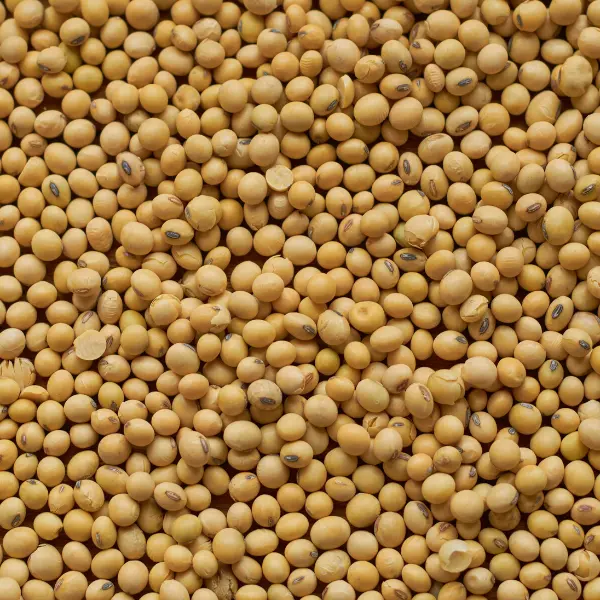
Soya beans are one of the most versatile agricultural crops in the world. The same bean can be processed into food, cooking oil, flour, animal feed, soy milk, tofu and several industrial products.
For buyers, processors and food manufacturers, that versatility is useful, but it also means that the quality you need depends heavily on what you want to produce.
So before buying soya beans in bulk, it helps to understand the product, how it is used, and the specifications that can affect its value.
What Are Soya Beans?
Soya beans, also written as soybeans, are the seeds of the plant Glycine max. They belong to the legume family and are grown for both their protein and oil content.
Soy is particularly useful in food production because soy protein contains all nine essential amino acids required in the human diet. Soy foods also provide nutrients including fibre, B vitamins, potassium and magnesium, according to the Harvard T.H. Chan School of Public Health.
This combination of protein, oil and processing flexibility is one reason soya beans have developed such a wide range of applications.
What Are Soya Beans Used For?
A buyer looking at whole soya beans may eventually turn them into a completely different product.
One route is direct food processing. Soya beans can be used to produce soy milk, tofu, fermented products and roasted foods. They can also be processed into soya beans flour for use in different food formulations.
The Food and Agriculture Organization of the United Nations describes two broad routes for soybean utilisation. The beans can be processed as whole seeds, or they can be separated into oil and meal through oil milling.
Once the oil is extracted, the remaining soybean meal becomes particularly useful as a protein ingredient in animal feed. Soybean oil also has applications in cooking, food manufacturing and industrial processing.
This means a food manufacturer, poultry feed producer and oil processor may all buy soya beans, but they may require different specifications.
Are Soya Beans the Same as Edamame?
They come from the same crop, but they are harvested at different stages.
Edamame are immature soybeans harvested while the seeds and pods are still green. Mature soya beans are allowed to develop further before they are harvested and dried.
The University of Illinois Extension describes edamame as immature soybeans.
This distinction matters when sourcing because a buyer looking for dried mature beans for oil extraction or flour production is purchasing a different commercial product from a buyer looking for fresh or frozen edamame.
Are Soya Beans Healthy?
Soya beans are valued primarily for their nutrient density and protein.
The Harvard T.H. Chan School of Public Health describes soy as a nutrient-dense source of protein and notes that soy protein is a complete protein containing all nine essential amino acids.
Mature boiled soybeans, tofu, tempeh and soy milk are some of the different ways soy enters the human diet.
There is also extensive research into soy isoflavones and their possible effects on human health.
The research is more complex than some marketing claims suggest. Different soy foods, quantities, populations and study designs can produce different results, so soya beans should be presented as a nutritious food ingredient rather than as a treatment for a particular disease.
Soya Beans for Flour, Oil and Animal Feed
Processing determines much of the commercial value of soya beans.
Soya beans flour can be made from whole or defatted beans and used in food production. The beans can also be crushed to separate soybean oil from soybean meal.
The Food and Agriculture Organization notes that soybean meal is widely used as a protein source in animal feed, while further processing can produce soybean flour, protein concentrates, protein isolates and textured soybean protein.
For a commercial buyer, this makes intended use important from the beginning.
Beans required for human food production may have different appearance, cleanliness, processing and food-safety requirements from beans destined for crushing or animal feed.
What Should Bulk Buyers Check When Sourcing Soya Beans?
Price alone does not tell you whether a shipment is suitable for your business.
Start with the specification.
A buyer may need to confirm:
- Moisture content
- Purity
- Foreign matter
- Damaged or discoloured beans
- Bean size and uniformity
- Packaging
- Quantity
- Processing requirements
- Storage conditions
- Destination-country requirements
Artesana currently lists its Nigerian Soya Beans in whole form, with moisture below 10% and purity above 98%. The product is quoted by metric ton.
The required specification should still be agreed before purchase because different processors and destination markets can have different requirements.
Nigerian Soya Beans and the Export Market
Nigeria has an established soya bean sector, with production concentrated across several northern and Middle Belt states.
The Nigerian Export Promotion Council includes soyabeans among the country's agricultural products with export potential and provides market information for Nigerian exporters.
Nigeria's position as an agricultural producer also means Nigerian soya beans can serve different categories of international buyers, including food manufacturers, oil processors, animal-feed producers and commodity traders.
But having the product available is only one part of a successful export transaction.
Quality, documentation, consistency and compliance matter too.
Export Requirements for Nigerian Soya Beans
Agricultural exports normally require more than an invoice and a shipment.
The Nigerian Export Promotion Council provides guidance on documentation required for formal exports from Nigeria.
Depending on the product and destination, documentation can include commercial documents, regulatory documents and quality-assurance certificates.
Plant products intended for export may also require phytosanitary inspection and certification.
The Nigeria Agricultural Quarantine Service is responsible for plant quarantine services and phytosanitary certification for relevant agricultural exports.
The exact requirements can vary depending on the importing country.
This is why exporters and buyers should confirm destination requirements before shipment instead of assuming that one specification or document works for every market.
Why Specification Matters Before You Buy
Imagine two buyers requesting 100 metric tons of soya beans.
One buyer wants the beans for animal-feed processing.
The other wants them for human food production.
They may be requesting the same commodity, but their requirements can be different.
The food processor may place greater emphasis on appearance, cleanliness, food-safety testing and specific processing requirements.
The feed producer may focus more heavily on protein value, moisture, foreign matter and suitability for crushing or feed formulation.
This is why we recommend agreeing on specifications before confirming a bulk order.
A clear specification reduces misunderstandings and makes it easier for both the buyer and supplier to determine whether the available product is suitable.
Sourcing Nigerian Soya Beans From Artesana
Artesana supplies Nigerian soya beans for domestic and international buyers.
Our current Soya Beans product is listed in whole form, with moisture below 10% and purity above 98%.
If you are sourcing for food production, oil extraction, animal feed, flour production, distribution or another commercial application, tell us exactly what you need.
Provide your required:
- Quantity
- Destination
- Intended application
- Moisture specification
- Purity requirement
- Packaging preference
- Delivery terms
- Additional quality requirements
This gives us a clearer understanding of what you are looking for and helps us determine the appropriate supply arrangement.
Visit the Artesana Soya Beans product page to review the product and request a quote.
Sources
 Artesana Editorial Team
Practical insights on agricultural products, sourcing, quality and international trade from Artesana.