Nigeria's inland dry ports may bring some export steps closer to farms, warehouses and processors. Agricultural exporters should still confirm what their chosen terminal can do before changing a route or promising a shipment date.
At the Abuja International Trade Fair, Nigerian Ports Authority Managing Director Abubakar Dantsoho said the Federal Government had approved the transfer of inland dry-port management and development functions to the NPA. Premium Times reported the statement on 6 October 2026. The fair ran from 25 September to 6 October.
Why the transfer matters
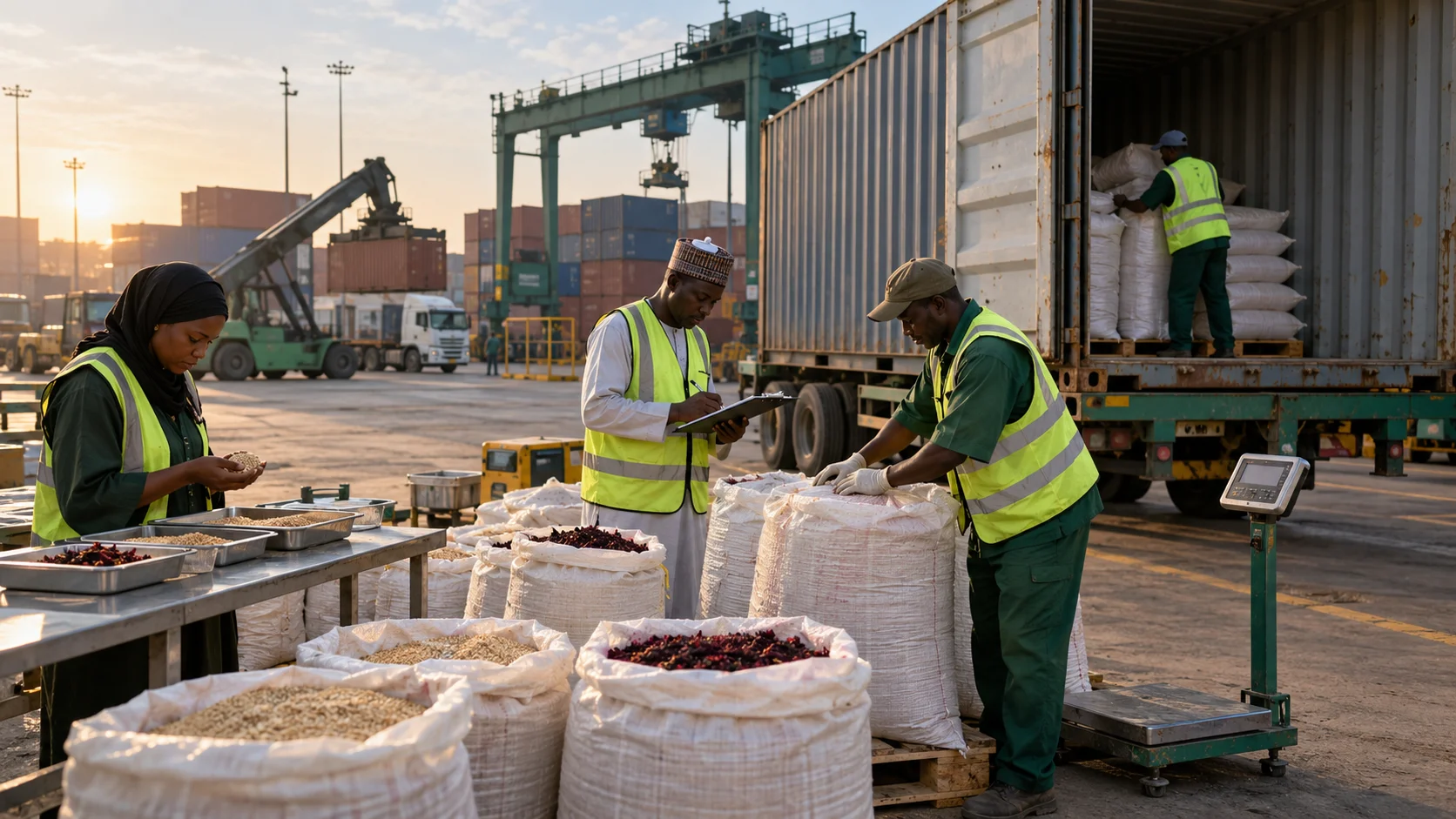
The stated plan is to let exporters in northern and central Nigeria complete port clearance and documentation nearer to the source of their goods. The cargo would still need a route to a seaport for vessel loading.
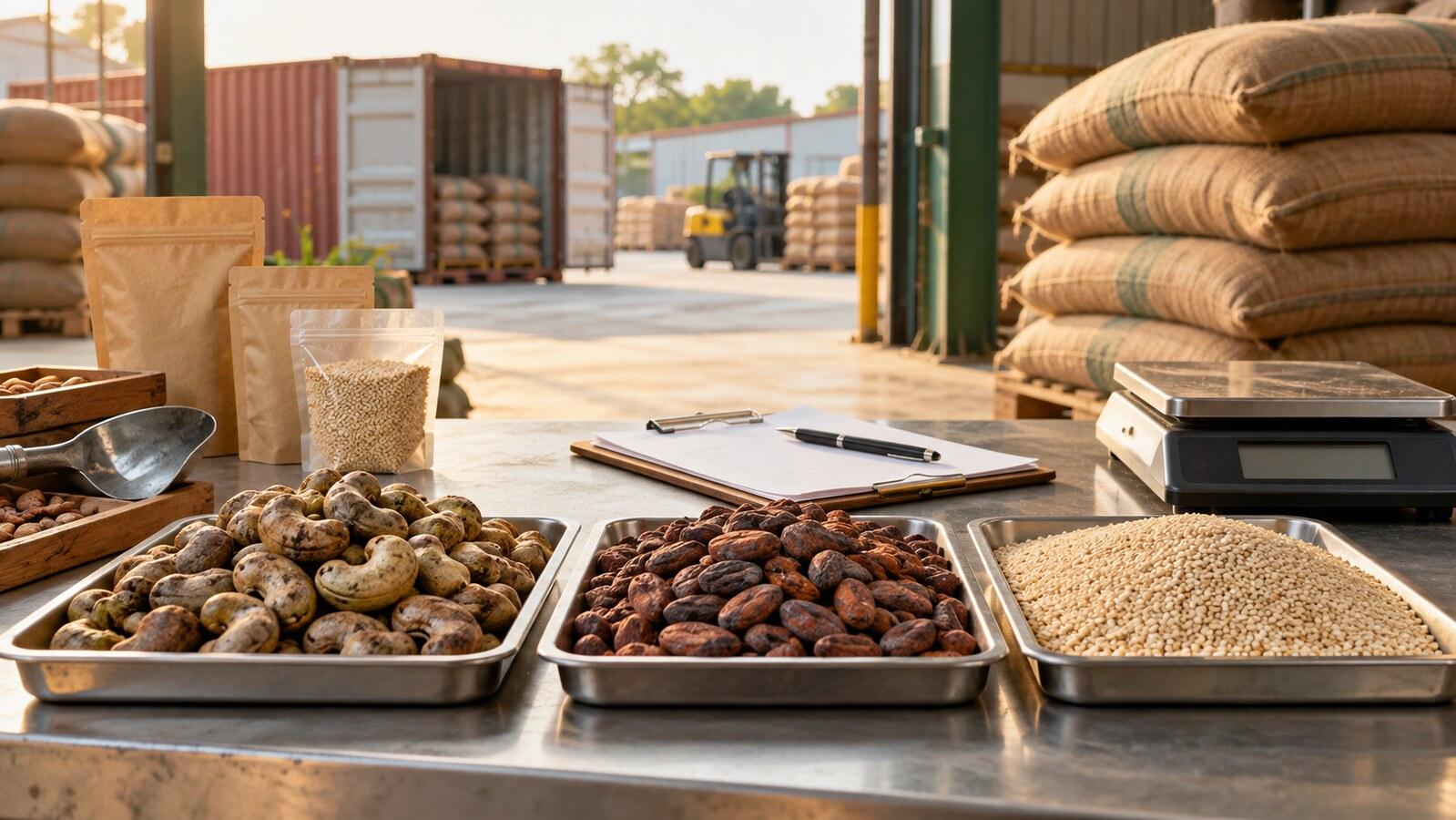
NPA also said dedicated Export Processing Terminals can support sorting, packaging, quality certification and customs documentation. It named cocoa, sesame, cashew and hibiscus among the agricultural exports using the wider system. An NPA handbook describes the export-terminal model and its link to the national agro-export programme.
This is an operational policy report, not a freight quote, commodity price or throughput record. It does not prove that every inland dry port offers the same services today.
Do not assume every terminal is ready
BusinessDay reported on 5 October that only the inland dry ports in Katsina, Kano and Kaduna were active out of seven. A 22 September Voice of Nigeria report said NPA and the Nigerian Ports Economic Regulatory Agency were working on the transition and a joint technical group had been proposed.
Ask the specific terminal, in writing, whether it accepts your commodity, container type and planned volume. Confirm which clearance and documentation steps can be completed there, which agencies are present, their operating days, and the cut-off for the onward movement.
Get the cargo handover in writing
Map the goods from warehouse to vessel. Identify who arranges weighing, inspection, container stuffing, sealing, storage, road or rail transfer and delivery to the coastal terminal. Record where custody changes and who carries loss, contamination, delay or demurrage at each stage.
Ask the shipping line or freight forwarder whether it accepts the proposed inland handover and container seal. Confirm the seaport terminal, vessel cut-off and booking reference before loading. An inland document check does not guarantee space on a vessel.
Keep quality requirements separate
Port clearance does not replace the buyer's specification or the destination country's import rules. Agree on grade, moisture, purity, residue or microbiological tests, packaging, sampling method and acceptable laboratory before the goods move.
Link each test result to the actual lot and keep purchase, processing, warehouse and packing records consistent. Confirm phytosanitary and other official certificate requirements with the relevant authority for the product and destination.
Price the complete route
Request dated quotations for inland haulage, terminal handling, inspection, storage, coastal transfer and ocean freight. Each quote should state currency, unit, location, validity period and trading basis. Keep an ex-warehouse product price separate from FOB, CFR or CIF costs.
No Nigerian commodity price or freight rate is quoted here. A claimed saving from an inland route should be checked against the complete delivered cost and the time needed for each handover.
For a first booking, use a manageable lot and record the actual days and charges at every stage. That gives the next quotation a stronger basis than a general promise of faster processing.
For a sourcing or export enquiry, contact Artesana with the product, specification, quantity, origin, destination and preferred delivery basis.
Sources
- Premium Times, NPA moves to cut export bottlenecks, targets forex inflows, published 6 October 2026; statement made during the Abuja International Trade Fair held 25 September to 6 October 2026: report.
- BusinessDay, NPA assures northern exporters of quicker processing with new control of inland dry ports, published 5 October 2026: report.
- Voice of Nigeria, NPA, NPERA Strengthen Collaboration on Inland Dry Ports, published 22 September 2026; reports a ministerial transfer direction dated 3 September 2026: report.
- Nigerian Ports Authority, NPA Handbook, undated PDF accessed 9 October 2026: official background.
 Artesana Editorial Team
Practical insights into agricultural sourcing, product quality and international trade.