Nigerian sesame exporters preparing an EU order should settle the food-safety evidence before promising a shipment date. A clean-looking sample and an attractive price cannot confirm that the delivered lot will meet the buyer's requirements.
This is a practical export-readiness explainer, checked on 5 October 2026. It draws on CBI's sesame market-entry guide, updated on 18 November 2024, and the European Commission's current import-control guidance. It does not announce a new sesame regulation or quote today's export price.
Start with the buyer's intended use
Ask whether the buyer needs natural, hulled or otherwise processed sesame, and what the product will be used for. Agree on colour, purity, moisture, packaging and acceptance conditions in writing. Keep commercial preferences separate from legal food-safety requirements.
CBI's sesame guide identifies microbiological contamination and chemical residues as important barriers to supplying Europe. Our practical advice is to ask the buyer for the required test panel and acceptance limits before paying for processing or booking transport.
Make the laboratory result match the lot
Agree on the sampling method, laboratory and tests with the importer. Record the lot number, sample date, processing stage and quantity represented by the sample. Ask whether testing is needed after the final cleaning or treatment stage.
Check that the laboratory can perform the requested analyses and that the buyer accepts its reports. A certificate from an earlier delivery should not be presented as evidence for a new lot. Where lots are combined, agree how the final consignment will be sampled and identified.
CBI recommends testing and supply-chain traceability. These records help you explain what was tested and connect the result to the goods offered. A private test report does not guarantee border clearance.
Check the applicable border process before loading
The European Commission's import-control guidance explains that certain foods of non-animal origin face mandatory border controls under Regulation (EU) 2019/1793. The lists are reviewed regularly, at intervals no longer than six months.
Ask the importer or customs representative to confirm the current rules for the exact product form, origin and commodity code. Establish the permitted entry point, advance-notification procedure and any official documents required for that consignment. Avoid copying an inspection percentage from an old market guide into a current shipping plan.
The Commission's questions and answers distinguish documentary checks, identity checks and physical checks, which can include sampling. Non-compliant consignments may be refused entry. Your contract should therefore state who manages an inspection hold, rejection or request for additional evidence.
Keep traceability practical
Create a lot file connecting supplier records, collection locations, processing records, sample identification, test reports, packing lists and dispatch details. Check that quantities and identifiers agree across the file.
The Commission explains that EU food-law traceability covers imported food. For Nigerian suppliers, the practical preparation is to give the importer a clear record of where the sesame came from and how the offered lot was assembled.
Keep storage and handling records too. Ask the processor how cleaned seed is protected from contamination during packing and loading. Confirm that bags and labels meet the buyer's requirements before the container arrives.
Price the order with its responsibilities included
Obtain current quotations for testing, processing, packaging, transport and freight. State the currency, quantity unit, delivery basis and quotation expiry date. Agree who pays for inspection-related storage or delay costs rather than leaving those responsibilities unclear.
There is no verified Nigerian spot price or freight rate in this article. Build your offer from the actual lot and route. You can contact Artesana with the product form, quantity, destination and buyer specification to discuss sourcing requirements.
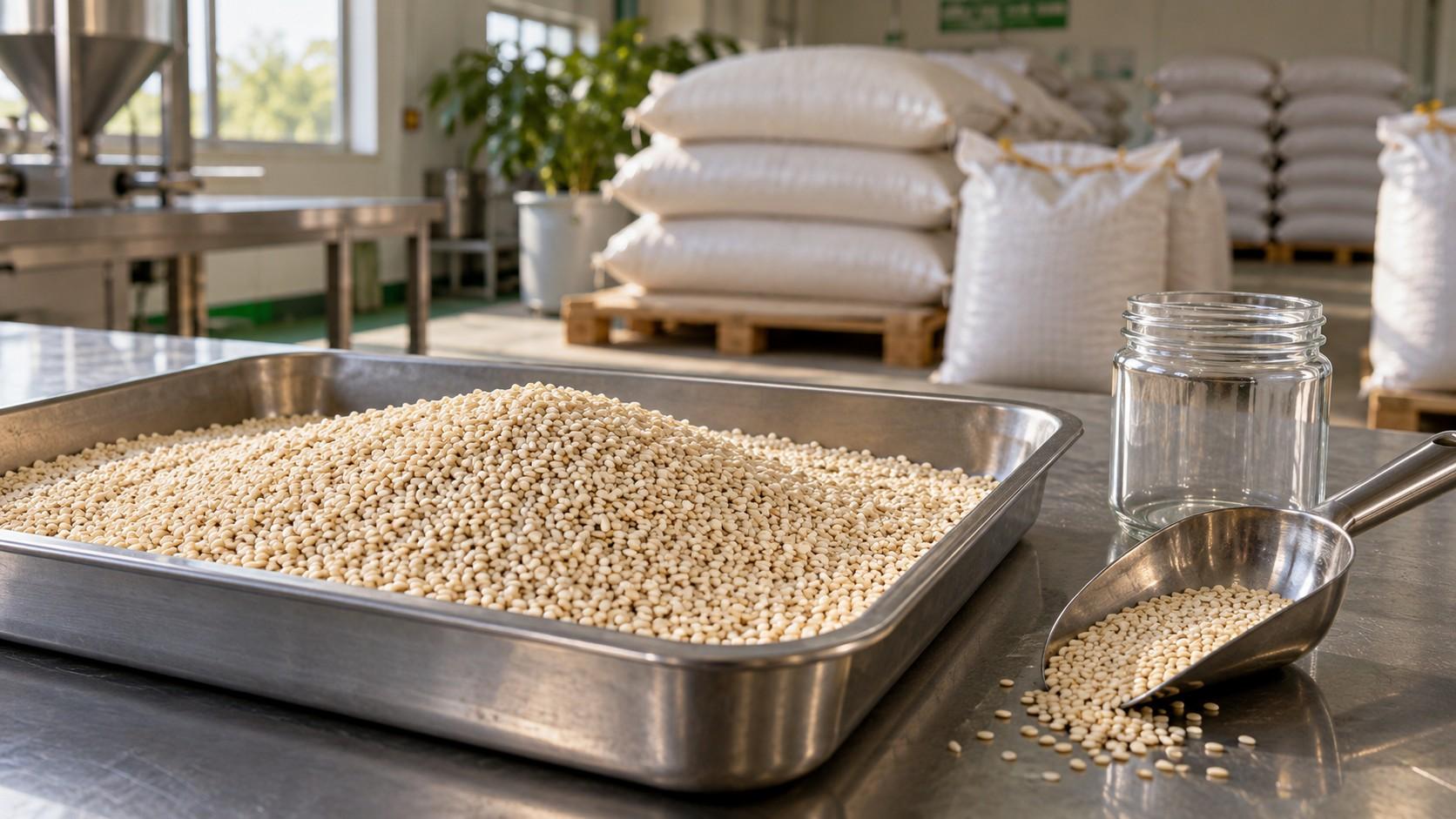
Featured image: AI-generated illustration of sesame sampling; not a photograph of Artesana stock or a specific shipment.
Discuss your sourcing requirements
Review Artesana’s sesame seeds product page and share your quantity, destination and buyer specification when requesting a quote. Availability, testing, packaging and delivery terms need to be confirmed for the particular order.
Sources
- CBI, Entering the European market for sesame seeds, updated 18 November 2024: market-entry guide.
- European Commission, Official controls on imported products, current guidance accessed 5 October 2026; page includes an import-controls factsheet dated 23 February 2026: official guidance.
- European Commission, Import controls of food and feed Q&As, undated page accessed 5 October 2026: controls and traceability.
 Artesana Editorial Team
Practical insights into agricultural sourcing, product quality and international trade.