
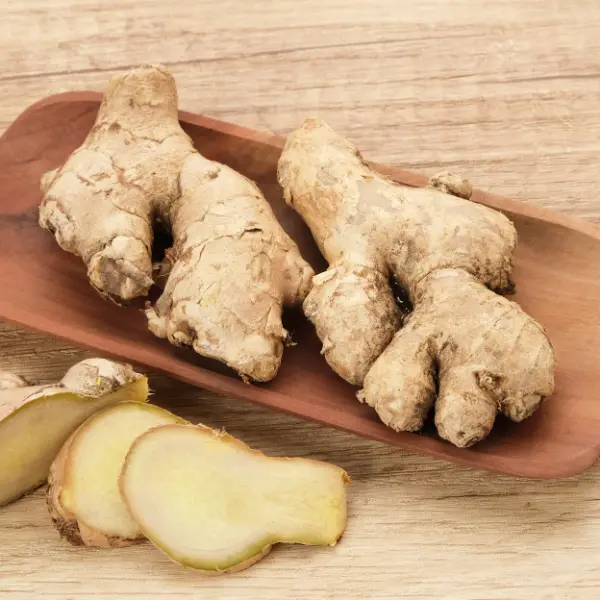
Ginger is used in kitchens, beverage factories, food processing plants, herbal products and spice markets around the world.
But a buyer sourcing ginger in bulk has more to think about than taste and appearance.
Moisture, volatile oil, cleanliness, form, contamination, storage and the intended use can all affect whether a particular batch is suitable for the buyer.
This guide explains what ginger is, how fresh and dried ginger differ, what research says about some of its potential benefits, and what buyers should check when sourcing Nigerian ginger.
What Is Ginger?
Ginger is the rhizome of Zingiber officinale, a flowering plant in the Zingiberaceae family.
The part we commonly call ginger root is technically an underground stem, or rhizome.
It has a strong aroma, warm flavour and characteristic pungency that make it useful across food, beverage and spice applications.
The National Center for Complementary and Integrative Health notes that ginger is grown in several parts of the world and that its rhizome is used both as food and for health-related purposes.
For commercial buyers, ginger can be supplied in several forms depending on the intended application.
These can include:
- Fresh whole ginger
- Dried whole ginger
- Dried split ginger
- Ginger pieces or slices
- Crushed ginger
- Ground ginger powder
- Extracts and oleoresins
The correct form depends on what the buyer plans to produce.
Fresh Ginger vs Dried Ginger
Fresh and dried ginger come from the same plant, but they behave differently during storage, processing and transportation.
Fresh ginger
Fresh ginger contains considerably more water and normally requires greater attention to shelf life, temperature, handling and spoilage.
It is widely used in cooking, beverages, food service and retail.
Dried ginger
Dried or dehydrated ginger has had much of its moisture removed.
This reduces weight and can make the product easier to store and transport when it is properly processed and protected from moisture.
The Codex Alimentarius standard for dried or dehydrated ginger recognises whole ginger, pieces and ground or powdered ginger as commercial forms.
For buyers, this means the word "ginger" alone is not enough for a bulk specification. The required form should be agreed before purchase.
What Is Ginger Used For?
Ginger has a wide range of food and commercial applications.
Cooking and food manufacturing
Ginger is commonly used as a spice in savoury and sweet foods.
Food manufacturers can use it in:
- Seasoning blends
- Sauces and marinades
- Bakery products
- Confectionery
- Processed foods
- Spice mixes
The required form can depend on the production system. A manufacturer may want whole dried ginger for further processing, while another may require powder with a defined particle size.
Ginger tea and beverages
Ginger is also widely used in drinks.
Fresh or dried ginger can be infused in water to make ginger tea, while beverage manufacturers may use ginger in teas, concentrates, syrups and other formulations.
A commercial beverage producer should define requirements such as flavour strength, cleanliness, microbiological limits and processing form before buying in bulk.
Extracts and oleoresins
Ginger can also be processed to recover concentrated flavour and aromatic components.
The Nigerian Export Promotion Council highlights the pungency and oleoresin characteristics of Nigerian ginger as important commercial qualities.
For extraction businesses, the chemical and sensory characteristics of the raw ginger can be particularly important.
What Are the Potential Benefits of Ginger?
Ginger has been used traditionally for a long time, and modern research has examined it for several health-related purposes.
One of the most studied areas is nausea and vomiting.
The National Center for Complementary and Integrative Health states that research suggests ginger may be helpful for nausea and vomiting associated with pregnancy. It also notes that evidence for some other forms of nausea is less certain.
A 2024 overview of systematic reviews and meta-analyses found evidence supporting ginger in some nausea and vomiting settings, while also noting that the methodological quality of many previous reviews was low or critically low. The study is available through PubMed.
Research has also examined ginger in relation to menstrual discomfort, osteoarthritis, digestion and metabolic health.
However, evidence differs depending on the condition, dose, preparation and study design.
Another important point is that many clinical studies use measured ginger supplements or extracts rather than ordinary ginger tea or the amount normally used in food.
So ginger can be discussed as a food and spice with interesting health research behind it, but it should not be presented as a guaranteed treatment for a medical condition.
People using medicines or considering ginger supplements for health purposes should discuss this with an appropriate healthcare professional, especially because herbal products can interact with medicines.
Does Ginger Tea Help With Nausea?
Ginger tea is one of the most common ways people consume ginger, but the evidence needs to be interpreted carefully.
Studies showing a possible effect of ginger on nausea do not automatically prove that every ginger tea preparation will produce the same result.
The amount of ginger, preparation method, concentration and reason for the nausea can all differ.
The NCCIH also points out that most studies of ginger for nausea have tested dietary supplements rather than foods.
For consumers, ginger tea can still be enjoyed as a beverage. Health claims should simply stay within what the evidence actually supports.
What Determines Ginger Quality?
For a bulk buyer, ginger quality should be agreed using measurable specifications.
1. Moisture content
Moisture is particularly important for dried ginger.
Too much moisture can reduce storage stability and increase the risk of deterioration if the product is stored incorrectly.
The current Codex standard for dried or dehydrated ginger specifies a maximum moisture content of 12% for dried or dehydrated ginger covered by the standard.
Artesana's current Ginger product lists moisture at 5 to 10% maximum.
A buyer should still state the exact moisture requirement in the purchase specification.
2. Volatile oil
Volatile oils contribute to ginger's aroma and flavour.
Codex sets minimum volatile oil values for dried ginger covered by its standard, with different requirements for whole or pieces and for ground or powdered product.
For manufacturers purchasing ginger because of its flavour profile, volatile oil can be an important testing parameter.
3. Purity and foreign matter
Bulk ginger should be assessed for unwanted materials.
These can include soil, stones, plant debris, packaging fragments or other foreign matter introduced during harvesting, drying, storage or transportation.
Codex includes limits for extraneous and foreign matter in whole and piece forms of dried ginger.
The buyer may require tighter limits depending on the final application.
4. Mould and pest damage
Poor drying or storage can expose ginger to mould, insects and other forms of deterioration.
Codex requires dried ginger to meet defined physical quality characteristics and also refers to relevant food hygiene, contaminant and mycotoxin controls.
A buyer should inspect the product and request laboratory analysis when the application or destination market requires it.
5. Aroma, flavour and colour
Ginger should retain its characteristic aroma and flavour and should not have abnormal odours associated with mustiness, rancidity or contamination.
Codex recognises that colour and sensory characteristics can vary with geographical and climatic conditions.
This makes a pre-shipment sample useful when appearance, pungency or flavour is important to the buyer.
6. Form and particle size
Whole ginger, split ginger, pieces and powder serve different manufacturing needs.
A processor buying whole material for milling will have different requirements from a company purchasing ready-to-use powder.
For powdered ginger, particle size and consistency can become part of the technical specification.
Nigerian Ginger and the Export Market
Nigeria has an established ginger industry, particularly in the northern part of the country.
The Nigerian Export Promotion Council describes Nigerian ginger as being known for its pungency and oleoresin characteristics and lists fresh, dried-split and crushed forms among the products supplied to international buyers.
NEPC also identifies Kaduna as an important producing area, alongside other producing states.
For a buyer, origin is only one part of the decision.
The actual batch should still be evaluated according to the specification required for the destination market and intended use.
Ginger Export Requirements From Nigeria
Formal exports from Nigeria require proper documentation.
The Nigerian Export Promotion Council states that exporters must register with NEPC and that export documents are required at different stages of a formal export transaction.
Depending on the shipment, relevant documents can include:
- NEPC Exporter's Certificate
- Export contract
- Commercial invoice
- Packing list
- Nigeria Export Proceeds Form
- Certificate of Origin
- Transport documents
- Quality and inspection documents
For agricultural commodities, phytosanitary requirements are particularly important.
The Nigeria Agricultural Quarantine Service inspects and certifies plants and plant products intended for export. The phytosanitary requirements of the importing country also have to be considered.
For processed or semi-processed food commodities, additional requirements may apply depending on the product and destination.
A buyer and exporter should therefore confirm the destination country's requirements before preparing the shipment.
What Should Bulk Ginger Buyers Ask For?
A buyer should provide a clear specification before confirming a large ginger order.
Useful requirements can include:
- Fresh, dried, split, crushed or powdered form
- Required quantity
- Destination country
- Intended use
- Moisture limit
- Purity
- Foreign matter limit
- Volatile oil requirement
- Colour and appearance
- Pungency requirements
- Microbiological limits
- Pesticide residue requirements
- Mycotoxin or contaminant limits
- Packaging
- Required laboratory tests
- Required certifications
- Incoterm
- Delivery schedule
Not every buyer needs every parameter.
But the intended use should guide the specification.
A spice manufacturer, tea producer, extraction company and retail distributor may all purchase ginger, but the quality requirements can be very different.
Sourcing Nigerian Ginger From Artesana
Artesana supplies Nigerian ginger for domestic and international buyers.
Our current Ginger product is listed as Nigerian in origin, whole in form, with 99% purity, 5 to 10% maximum moisture, organic cultivation and ASTA grade.
Where certification, laboratory values or a particular destination standard is required, these should be confirmed against the specific shipment and buyer specification before purchase.
If you are sourcing ginger for spice production, tea, food manufacturing, extraction, distribution or another commercial application, provide your intended use and required specification when requesting a quote.
This makes it easier to determine whether the available product matches what your business needs before packing and shipment.
Visit the Artesana Ginger product page to review the product and request a quote.
Sources
 Artesana Editorial Team
Practical insights on agricultural products, sourcing, quality and international trade from Artesana.