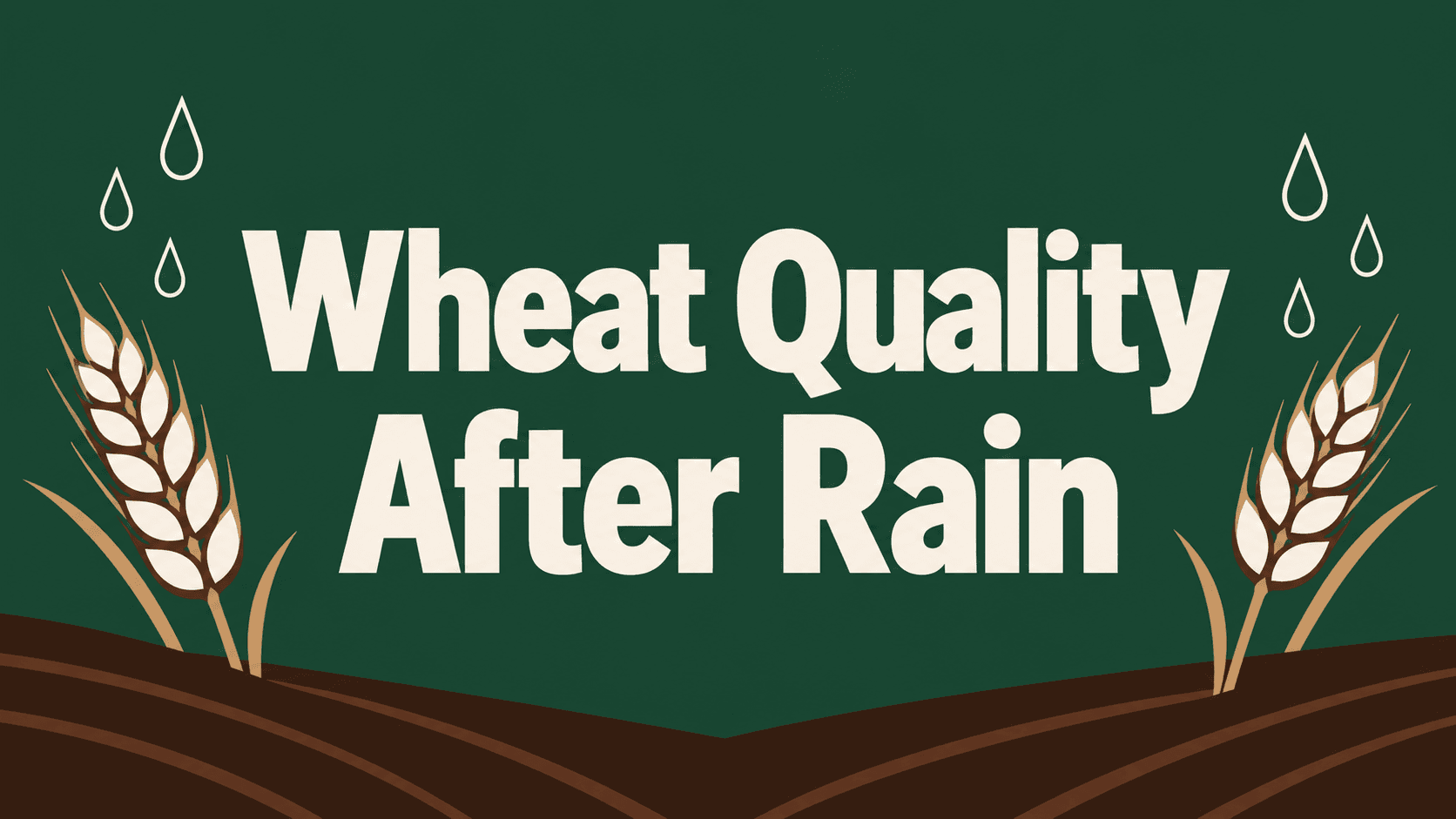
Nigerian flour millers considering Canadian wheat should ask for current quality evidence before accepting a new-crop offer. Wet harvesting conditions have made the difference between grain quantity and milling performance more relevant to the buying decision.
The latest Saskatchewan crop report, released on 15 October 2026, puts the province's harvest at 93% complete for the reporting period 6 to 12 October. Spring wheat was 96% harvested and durum 97%. These percentages measure harvest progress across Saskatchewan, not the proportion meeting a particular milling specification.
Harvest progress does not settle quality
The provincial report says rain and snow slowed remaining fieldwork. It also reports average yields at or above historical averages for most crop types, with variation between areas. That gives buyers a production update, but it does not certify a cargo's baking performance.
Reuters reported on 15 October that September rain had damaged some Canadian spring wheat and pulse crops. Its visit to the Canadian Grain Commission found inspectors examining sprout-damaged wheat samples. The report said broader government and industry assessments reflecting the damage were expected in mid-November.
Those observations do not establish that every Canadian wheat lot is damaged. They also do not establish a Nigerian shortage. Our procurement view is that buyers should obtain lot-specific evidence while the wider quality picture is still developing.
Ask for falling number alongside protein
Protein is one part of a flour mill's specification. Buyers concerned about sprouting should also discuss falling number with their laboratory and technical team.
The Canadian Grain Commission's testing guidance explains that germination increases alpha-amylase, an enzyme that breaks down starch. The falling number test measures how long a stirrer takes to fall through a heated slurry of ground wheat. Higher enzyme activity makes the slurry thinner and reduces the result, which is reported in seconds.
This is established technical guidance, last modified on 21 October 2019, rather than a new test introduced this month. Agree the acceptance value for your intended product with the mill's technical team. A generic threshold copied from another buyer's contract may not suit the flour or process you need.
Ask the seller to state the wheat class, crop year, grade, protein level and reporting basis, moisture, test weight and falling number. Request the laboratory method and sample date. Keep the sample identifier connected to the lot being offered, rather than accept a certificate from unrelated stock.
Review samples before changing the blend
For a mill considering a different origin or class of wheat, our recommendation is to run the usual milling and product trials before committing to a large replacement purchase. Compare the proposed wheat with the mill's current blend under the same test conditions.
Agree who takes the representative sample, which laboratory tests it and how any disagreement will be resolved. State whether acceptance relies on loading-port results, arrival results or another agreed procedure. Retain sealed reference samples where the contract calls for them.
Farmers and aggregators offering Nigerian wheat can apply the same discipline to their own lots. Keep harvest and drying records, separate identifiable batches and give the buyer the evidence required for the intended use. An overseas quality concern does not automatically make a local lot an equivalent substitute.
Price the specification you will receive
Compare offers with the same product specification, quantity, currency, unit and delivery basis. Record the named port or delivery location and quote expiry. Keep testing, handling and transport costs visible alongside the grain price.
No current Nigerian wheat price, Canadian export quote or freight rate is quoted here. Obtain those figures for the actual lot and shipment window before calculating landed cost.
For an agricultural sourcing enquiry, contact Artesana with the product, quantity, specification and destination. Availability and delivery terms need confirmation for each order.
Sources
- Government of Saskatchewan, Crop Report for the Period October 6 to October 12, 2026, released 15 October 2026: https://www.saskatchewan.ca/government/news-and-media/2026/october/15/crop-report-for-the-period-october-6-to-october-12-2026
- Reuters, Canada's farmers, crop quality assessors confront damage after wet harvest, 15 October 2026; reporting on September harvest damage and October inspections: https://www.reuters.com/world/canadas-farmers-crop-quality-assessors-confront-damage-after-wet-harvest-2026-10-15/
- Canadian Grain Commission, Procedures for the falling number test, modified 21 October 2019, accessed 17 October 2026: https://www.canada.ca/en/grain-commission/services/science/methods/procedures-falling-number-test.html